Do Vertically Integrated Companies Benefit From Design Thinking?
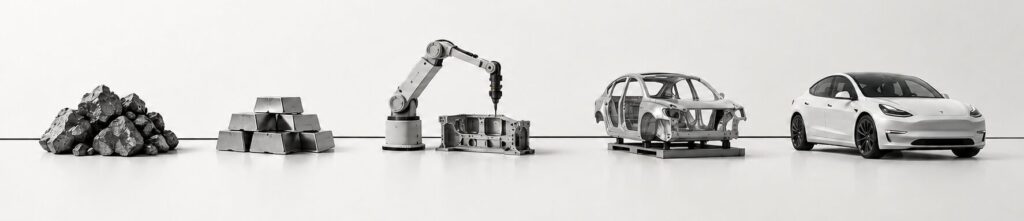
Tesla, John Deere, Boeing, and Caterpillar all make their own parts, run their own assembly lines, and control nearly every stage of production. What they also have in common is that they are renowned companies known for being vertically integrated and in full control of their products and brand.
Vertical integration means a company controls multiple stages of production in-house, from raw materials or components through assembly, rather than outsourcing them to suppliers. It’s valuable because it gives a company control over cost, quality, and speed without depending on outside vendors. It means the company has full autonomy over it brand and how they want to be perceived in the marketplace.
Pros of vertical integration
- Tighter control over cost, quality, and lead times
- Faster iteration since there’s no vendor back-and-forth
- Protects proprietary processes and IP
- Simplifies the supply chain and reduces dependency risk
Cons of vertical integration
- Design often isn’t core to the business, so it’s underfunded or absent entirely
- Existing internal teams (if there are any) are stretched thin across every product line
- Engineering-led culture can optimize for what’s manufacturable over what’s desirable
- Deep familiarity with existing tooling can narrow the range of ideas considered
Even with all the advantages of vertical integration, there is still value in bringing in an outside perspective. Design firms work across industries and are exposed to different products, processes, materials, and manufacturing methods. That experience can bring new thinking into an established operation.
Outside Perspectives With Inside Capabilities
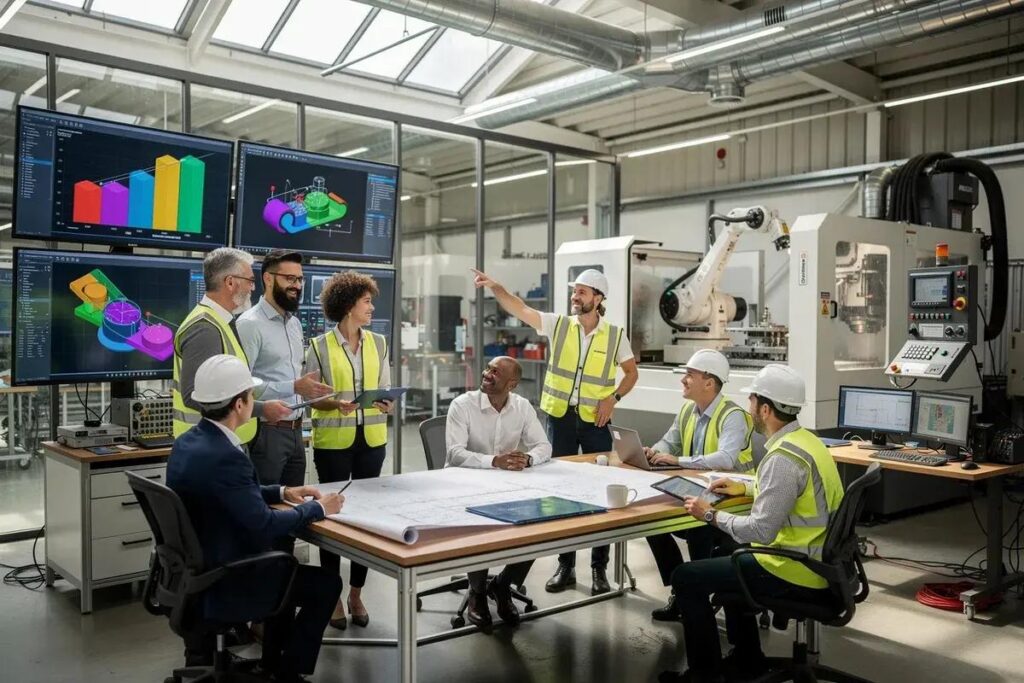
Vertically integrated companies already have the equipment, people, and knowledge to make things. The question is: Are you getting everything you can out of those capabilities?
An outside team may see opportunities that aren’t as obvious internally. Can two parts become one? Can an assembly step be eliminated? Can existing equipment be used in a new way? Designers explore every avenue to determine what is truly feasible and offers the greatest value to the business.
DFM for the Tooling You Already Have
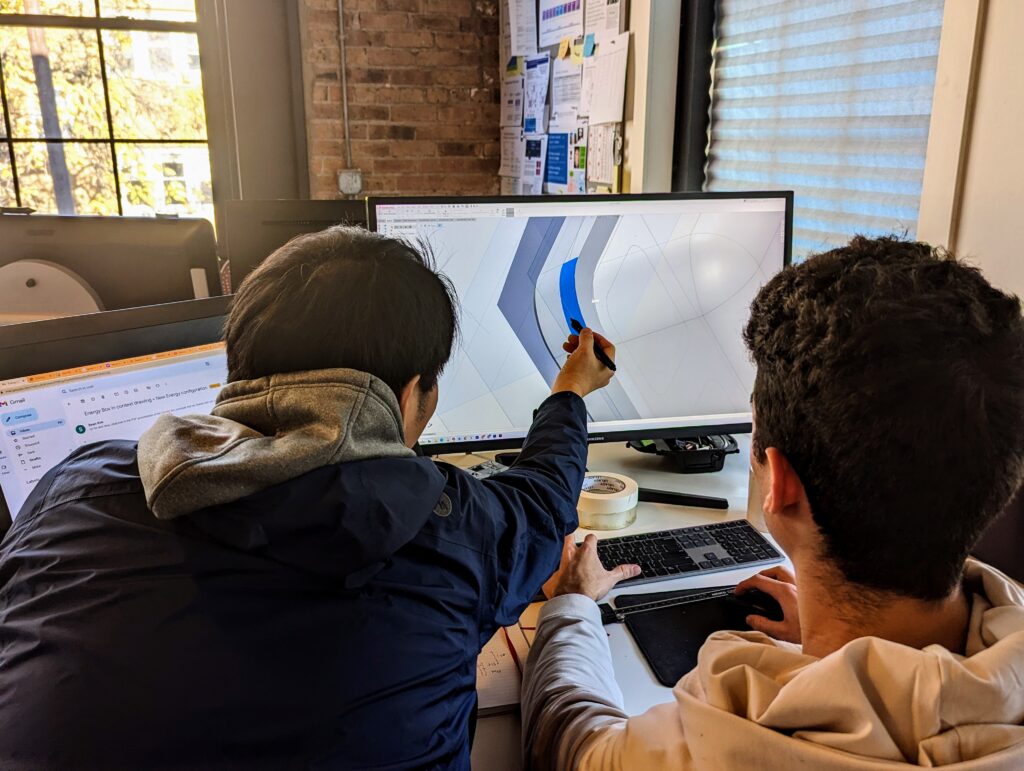
Good design has to work with existing manufacturing capabilities, not against them. Understanding the tooling, machinery, materials, and processes already in place allows DFM to start early.
Fewer parts, fewer steps, and simpler assembly can all lead to lower costs and a better product.
Let Your Team Focus on What They Do Best
Internal engineering teams have production to support and problems to solve every day. An outside design team can explore new ideas without pulling those resources away from the work already being done.
Once an idea is proven, the internal team has the knowledge and capabilities to take it forward.
Capability Was Never the Question
Vertically integrated companies already know how to make things. Sometimes the opportunity is simply seeing a different way to make them.
Combining outside design thinking with internal manufacturing expertise can lead to better products, better processes, and better use of the capabilities you already have.
If your company wants to put its capabilities to better use, contact Beyond Design to start a conversation about your next product opportunity.
 Top
Top